About
This guide has been created by the Regional Assessment and Resource Centre, to be a comprehensive resource designed to support students with disabilities, as they prepare for life beyond high school.

This guide has been created by the Regional Assessment and Resource Centre, to be a comprehensive resource designed to support students with disabilities, as they prepare for life beyond high school.
Planning for life after high school is an important process for all students, and especially so for students with disabilities. New environments come with new people, policies, and expectations, and by planning for the transition, students are able to prepare for the responsibilities and challenges that await them. Transitioning from school to adulthood also involves many decisions about education, employment, independent living, community involvement, and support services. These decisions often require careful thought and exploration over time.
Effective planning allows students, families, educators, and support teams to identify goals, understand available resources, and develop the skills needed for success in adult life. By starting early and being involved in the process, transition planning can help create a smoother path to greater independence, meaningful opportunities, and a fulfilling future.
Check out these transition planning documents to help you get prepared and learn more about the transition process:
This website is designed to provide students, families, caregivers, and teachers with the information and resources they need to prepare for the next steps after high school. The website can be used in many different ways:
This website is all about you! Life after high school will be different, and this website can guide you through how to get prepared. You can learn about and explore the different pathway options, and ways to try them out in high school through co-ops or special programs. You can focus on the skills you'll need in your chosen pathway, such as time management, literacy, or living independently, and then make a plan to practice and develop these skills. You can also learn about the disability and accessibility supports and accommodations available in your pathway, how to access them, and what documentation you may need.
No matter who you have helping you prepare for the transition after high school - you are the one taking charge! This transition is all about you, as you step into your adult life and whatever comes next after high school. The Transition Resource Guide is here to help you learn, explore, and guide you to success as you take your next steps!
Families and caregivers, you play an important role in helping students transition from high school to different pathways. This period is a pivotal time for young people as they build independence, self-confidence, and decision-making skills. Families can support students by discussing goals, helping them explore options, encouraging thoughtful planning, and providing guidance when challenges arise. You can use the Transition Resource Guide to learn together with your student about what to expect in their pathway, how to get prepared, and the types of support available.
At the same time, you should also allow students to take increasing responsibility for their own choices and tasks. This might include encouraging students to take the lead on things like completing applications, communicating with teachers or employers, managing their time, and solving problems independently. Rather than making decisions for them, you can ask questions, offer advice, and help students think through options. This balance of support and independence helps young people develop the skills they need to succeed and feel confident as they move into adulthood.
The Transition Resource Guide has lots of information and resources to help you guide students through the transition. From before high school starts, students and families can begin to explore what life after high school entails and learn more about the different pathways. There are teacher resources and worksheets to help with understanding transition best practices, helping students set goals, and crafting transition plans and alternate programming goals on the IEP. There's also lesson plans so that you can incorporate transition planning into classes such as Career Studies or Learning Strategies. You can share this website and the resources to families through your website, social media, and in transition planning meetings.
Teachers like you play an important role in guiding students and families through an important and often stressful time. We hope that you can use this website to help support and empower students and their families with the knowledge and resources that they need to feel more prepared and ready for their next steps after high school!
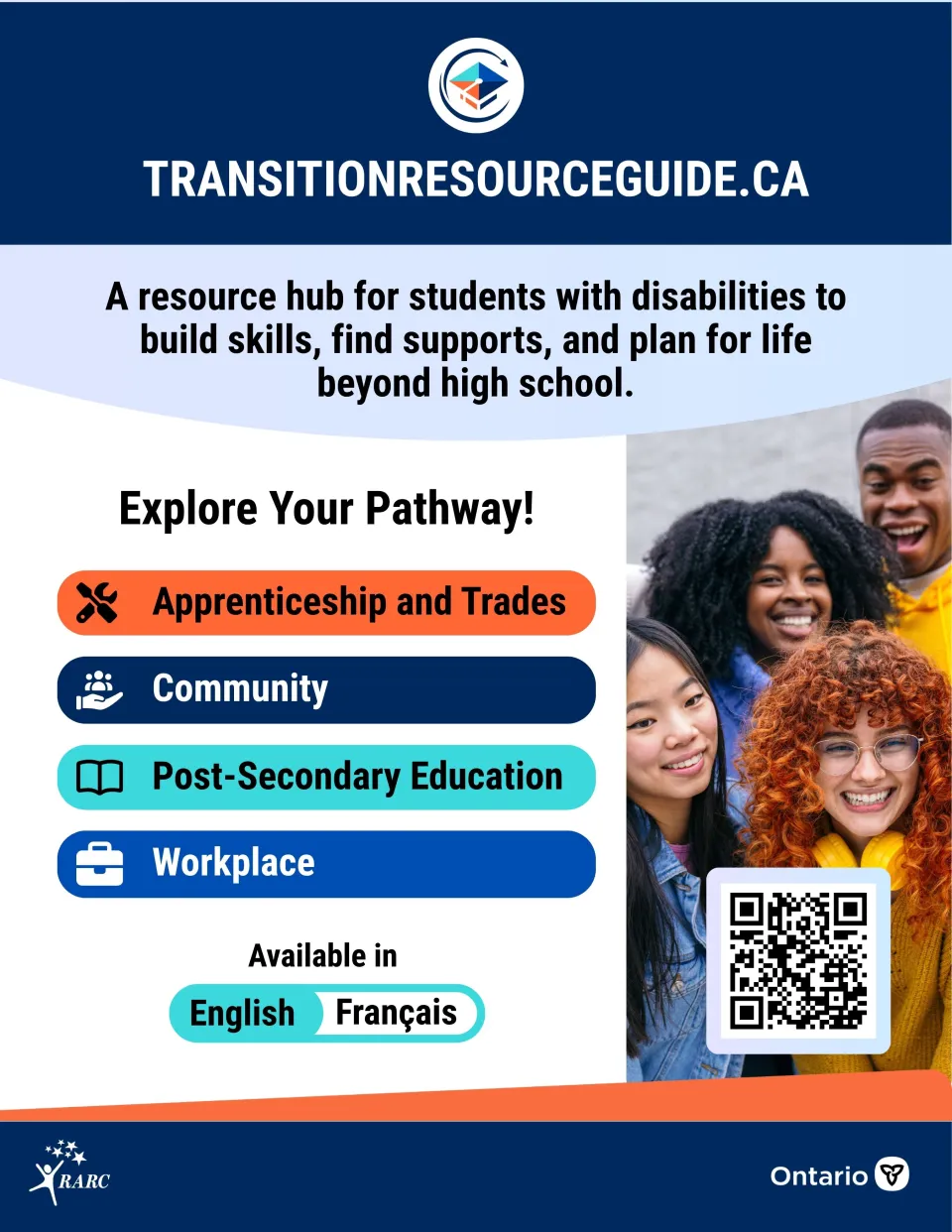
Looking to promote the TRG? You're welcome to use these promotional materials to share our website and its resources with students, families, and other community members.
TRG Poster 8.5x11: English (PDF 400kb) French (PDF 400kb)
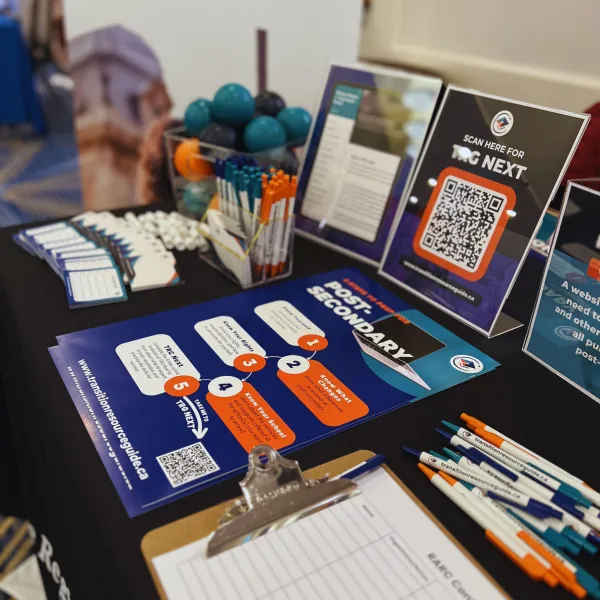
If you have a large-scale event (in-person or virtual) that you would like to invite our team to, for an informational booth and/or presentation, please complete our Transition Team Service Request Form.
Please note, we’re only able to offer booths and presentations in English at this time.
This guide has been created by the Regional Assessment and Resource Centre (RARC). The RARC promotes equity and access for students with disabilities in post-secondary education, by providing evidence-based services and supports to students, practitioners, and educators across Ontario. The RARC strives for excellence in empirically driven assessments, training, transition programming, and research, all in the pursuit of equipping students with the knowledge, skills, resources, and abilities required to access and navigate post-secondary education.
The RARC Transition Resource Guide would not be possible if we did not have the support of the many people who took the time to develop and review content, attend meetings and presentations, provide valuable feedback, suggest new ideas and assist in the technical aspects of the website creation.
In particular we would like to thank: