Post-secondary education icon

Navigating Post-Secondary

Your experience in post-secondary education will be shaped by your individual strengths, needs, and disability-related impacts. Some challenges can be managed using personal strategies you already use or can develop, while others may be best supported through academic accommodations or campus services. Knowing what kinds of challenges you might encounter can help you plan ahead to hone required skills and know how to access supports when needed. 

Students with disabilities may experience challenges in areas such as: 

  • Reading: identifying words, reading at a reasonable pace, or comprehending written materials 
  • Writing: spelling, grammar, or organizing essays and assignments 
  • Note-taking: listening to instructors while capturing key information 
  • Test-taking: managing time, using effective strategies, or working under pressure 
  • Participation: group work, presentations, or speaking in class 
  • Mobility: navigating campus buildings and getting between classes 
  • Organization and time management: planning, prioritizing, and meeting deadlines 
  • Self-care and independent living: balancing daily routines, class attendance, and personal responsibilities 

Understanding these potential challenges is not about focusing on limitations—it is about identifying what supports and strategies can help you succeed and feel confident in your post-secondary learning environment.  

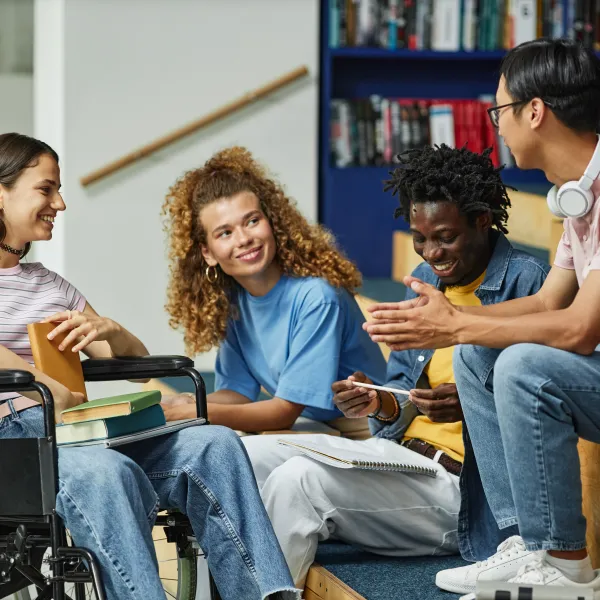
Diverse group of young people chatting in college library including female student with disability

What Are My Rights?

In Ontario, students with disabilities have the right to equal treatment in post-secondary education. This means you are protected from discrimination and are entitled to fair access to educational opportunities. Federal and provincial laws require post-secondary institutions to provide appropriate accommodations, services, and supports when disability-related barriers affect a student’s ability to fully participate or to demonstrate their knowledge and skills. Understanding your rights can help you advocate for yourself and access the supports you need. 

Here are some key things to know: 

  • Students are expected to meet the academic and essential requirements of their program. As such, unless you are enrolled in a specialized program, such as CICE, program modifications are not available in post-secondary education. 
  • To receive academic accommodations, students must have a documented disability. This is a change from elementary and secondary school where academic accommodations or special education supports may be provided without a formal diagnosis of a disability. 
  • A diagnosis of a disability is necessary but not sufficient to request for academic accommodations. The disability must impact the student’s ability to fully participate in the learning environment. 
  • Accommodations are designed to support access and fairness but do not guarantee success.

Changes from High School

If you have a disability that impacts you while learning, you can request accommodations at post-secondary. However, the process for requesting accommodations and what accommodations you may have access to is different at college and university than it was in high school, so it’s important to understand what to expect and how to prepare.

Key things to know:

Individual Education Plans (IEPs) do not continue after high school. IEPs only apply in elementary and secondary school, and post-secondary institutions use their own processes to decide how accommodations are provided.

To access post-secondary accommodations, you must have a diagnosed disability and disability-related functional impairments that affect your ability to participate in your learning. Not everyone who had an IEP or received support in high school has a formal diagnosis. If you’re unsure, consider talking with a healthcare provider or reviewing your documentation (such as your IEP).

You will need to provide up-to-date documentation of your disability (according to your institution's documentation requirements).  Depending on your disability and the documentation you already have, you may need to obtain updated documentation.  

It's quite possible that you will receive reduced accommodations at post-secondary than what you received in high school, as the legislation, process, and goals are different in the post-secondary environment compared to high school.

Accessing accommodations and disability-related supports in post-secondary education, is largely a student-driven process. You will need to reach out to your institution's Accessibility Services office to register and set up accommodations. This may be quite different from your experiences in high school, especially if your caregivers and/or teachers arranged your Individual Education Plan (IEP) and accommodations without much of your involvement. 

Change can always feel scary, but knowing what to expect and learning more about what's to come can help you feel more prepared.

Will I get the same support and accommodations in post-secondary education as I received in secondary school?

The short answer is, probably not. There are different laws at the different levels of education, but also different goals. In elementary and secondary school, the goal of special education is success. You do not have to have a diagnosed disability to receive academic accommodations as outlined in an Individual Education Plan (IEP). Teachers often focus accommodations on what students need to be successful, in order to earn their credits and graduate with a high school diploma. 

In post-secondary education, the goal of special education support is access. Students have the right to access post-secondary education and not be discriminated against for having a disability. However, there is no guarantee of success. Accommodations are very closely tied to diagnosed disabilities (with up-to-date medical documentation) and focus on disability-related impairments. Further, there are no modifications in post-secondary education (unless a student is enrolled in a special education program, such as CICE) and, therefore, students have to be able to master core aspects of a course curriculum (essential requirements), with or without accommodation, in order to pass a course.

How can I prepare for these changes?

It can feel a little scary to think about getting different, or sometimes fewer, supports as you move from secondary school into post-secondary education. That feeling is completely understandable. What is important to know is that this change is intentional and positive. It doesn’t mean support is being taken away—it reflects a shift toward greater independence and preparation for life beyond school.

Not every disability-related functional challenge requires an accommodation. Many challenges can be addressed through skill development—learning strategies, tools, and habits that allow you to meet demands independently. When skills are strengthened, formal accommodations may no longer be needed, and that’s a sign of growth, not loss.

One of the best ways to prepare for this shift is to regularly review your Individual Education Plan (IEP) and accommodations while you are still in high school. The goal is to ensure supports are appropriate and helpful—without over-accommodating. IEPs and accommodations should evolve over time to match your changing needs, your grade level, and your growing independence.
 

How can accommodation planning in elementary and high school help?

Supports exist along an accommodation continuum, meaning that as students grow and develop, accommodations and supports should become more specific and promote independence. Accommodations are most effective when they are used to address needs that are ongoing and relatively static, areas that cannot be changed through instruction, practice, or intervention. 

Many challenges can be reduced or even eliminated through skill development. When skills can be strengthened, accommodations may no longer be necessary. In contrast, when skills cannot be addressed through intervention, accommodations serve as a way to compensate so you can fully access learning and demonstrate your abilities.

As students move from elementary to secondary school, accommodations should gradually shift along an accommodation continuum, from being more teacher-driven (such as dictation, chunked assignments, or receiving photocopied notes) to being more student-driven (such as using assistive technology, digital planners, note-taking tools, or recording lectures). This gradual change helps build independence and prepares students for post-secondary expectations.
 

What can I expect after post-secondary, when I enter the workplace?

Post-secondary education is a bridge to employment for most students. The legislation that supports students with disabilities in post-secondary settings is the same legislation that underlies accommodations in employment. That makes this an ideal time to pause, reflect, and plan for the future by:

  1. Re-evaluating your current strengths and needs, recognizing how much you’ve already learned and accomplished.
  2. Identifying areas where skill development can reduce your reliance on formal accommodations or disability-related supports, increasing confidence and independence.
  3. Clarifying which needs are ongoing and cannot be changed, and therefore should be supported through targeted accommodations, assistive tools, or other compensatory strategies.

This process isn’t about taking support away—it’s about ensuring you have the right mix of skills and supports to help you thrive now and in the future.

Requesting Accommodations

The accommodations and supports provided in post-secondary programs are meant to ensure that students with disabilities have equal opportunities to access the curriculum and to demonstrate their knowledge and understanding of course material. Learn more about how to access academic accommodations below.  

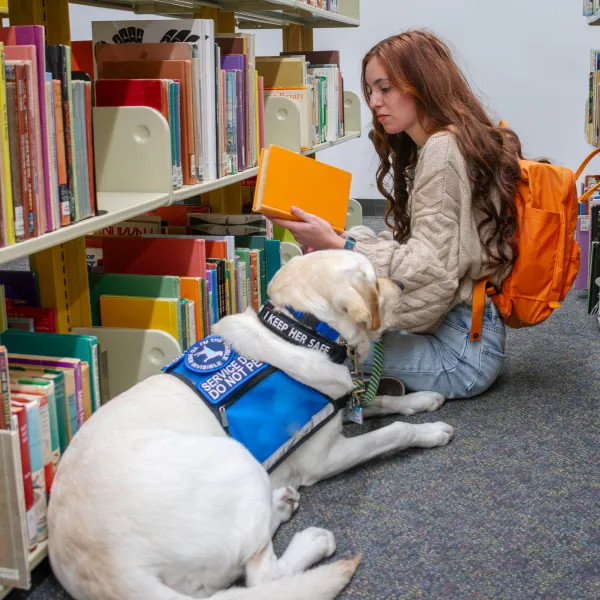
Young woman with service dog sits in university library looking at books

The Accessibility Services Office

Publicly funded post-secondary institutions will have an Accessibility Services (AS) office, with accessibility advisors who determine and coordinate academic supports and accommodations to students with disabilities.

In order to request support and accommodations, students must:

  • Self-identify. In post-secondary education, it is the student’s responsibility to self-identify as a student with a disability and to register with the Accessibility Services office in order to receive accommodations.
  • Reach out and register with the Accessibility Services office. To find out the specific name and website for your institution, visit Research Schools. You are encouraged to do this early, in the summer prior to entering your first year of studies.
  • Provide appropriate documentation of their disability. This typically includes documentation (e.g., Psychoeducational Assessment Report, Disability Verification Form) from a health care provider which indicates your diagnosed disability as well as the functional disability-related impairments anticipated in the post-secondary environment.
  • Follow the rules and guidelines set out by the accommodations advisor, such as attending appointments and completing required paperwork.

It can take several weeks to get an appointment and set up your accommodations for post-secondary, and even longer if you need to obtain new documentation.  To make sure your accommodations are determined and set up before your first day of class - be sure to reach out and register early! Many institutions offer intake meetings over the summer for incoming students, allowing you to get registered and organized before your first semester starts. Once you've accepted an offer of admission and have a student number and email, you should reach out to your Accessibility Services office.  Remember, that is is a student-driven process.  You (not your parent, family members, or teachers) will need to register with the Accessibility Services office to arrange your accommodations.  

Documentation Requirements

An IEP (Individualized Education Plan) from secondary school provides summaries of previous evaluations, gives information about your strengths and needs, and indicates accommodations provided for high school courses. However, an IEP, in and of itself, is not sufficient to register for and access post-secondary accessibility supports. Each institution will have its own policies and procedures regarding the documentation required to register with their Accessibility Services office. Students are typically required to provide documentation from a qualified practitioner that confirms a diagnosis of a disability and indicates the disability-related impacts anticipated in your post-secondary coursework. Staff at your Accessibility Services office can assist you in obtaining up-to-date documentation or assessments as needed.

Be sure to check with the Accessibility Services office at your institution to determine specifically what documentation requirements they have.

Some common requirements are:

  • Learning disability or specific learning disorder: A recent psychoeducational assessment (conducted within the last 3-5 years or when you were 18 years of age or older)
  • Attention Deficit/Hyperactivity Disorder (ADHD): A diagnosis by a psychologist, psychiatrist, or physician who has appropriate training in neuropsychological disorders
  • Autism Spectrum Disorder (ASD): A medical form or letter from a qualified specialist or a psychoeducational assessment
  • Mental health disorders: A medical form or letter from a qualified specialist indicating the student’s area(s) of disability and functional limitations
  • Deaf or hard-of-hearing: An audiologist report
  • Blind or low vision: A vision assessment and/or CNIB registration number
  • Physical disability or medical condition: Documentation from a qualified specialist indicating the diagnosis and anticipated functional impairment(s)

Types of Accommodations

Student who have disability-related functional impairments that affect their ability to participate equally can be accommodated, so long as the accommodations do not alter the essential requirements of the task or activity. Accommodations do not give students an unfair advantage in their course work; they are designed to address specific barriers and are determined for each student on a case-by-case basis. Accessibility advisors at each school review the documentation of students with disabilities and determine which accommodations each student needs.

Types of accommodations may include:

  • Access to a computer or spell check on exams 
  • Alternate format material (e.g., Braille) 
  • The ability to audio record lectures 
  • Writing tests or exams in a distraction-reduced setting
  • Extra time on exams


Modified Coursework

Traditional post-secondary programs and courses do not offer modified course work. Students must be able to meet the academic requirements of the program, and accommodations cannot undermine the essential requirements of a program or course.

The Community Integration through Co-operative Education (CICE) program is an inclusive college program designed for students with intellectual disabilities or other significant learning challenges, that combines academic learning, skill development, and work placements in the community. In this program, courses can be modified to meet your individual needs. Students can register with Accessibility Services, as well as having access to a learning facilitator for both in-class support and tutoring outside of the classroom. 

It's important to know that students who complete the CICE program will earn a certificate, rather than a traditional college diploma. While some graduates of the CICE program may pursue further post-secondary education, or secure a job in a related field, completing the CICE program does not guarantee job readiness or ability in that career field. You can learn more about CICE and explore their programs here: Community Integration through Co-operative Education (CICE)

Other Support Services

Beyond accommodations, post-secondary institutions have a wide range of services to support students with disabilities and the wider student population. These include: 

  • Summer Transition or Orientation Programs: Some schools offer workshops for students with disabilities to help them prepare for life in post-secondary education; these programs range from one-day events to week-long transition camps
  • Appointments with a Learning Strategist: Many schools employ Learning Strategists to help students with disabilities develop strategies to improve their study skills and work habits
  • Peer Mentoring: Some schools offer peer mentorships with upper-year students to gain advice and information about navigating post-secondary life
  • Academic Support: Most schools offer academic support (in reading, writing and math) to all students in a student success centre 
  • Student Health Centre and Counselling Centres: Most schools have a health centre (for medical issues) and mental health counselling (anxiety, depression, substance abuse and more) for students 
  • Additional services that schools may offer include: academic advising, career services, library, and other population specific services including Indigenous Centre, First-Generation Centre (for students whose parents did not attend post-secondary), International Student Centre, Human Rights Office, and resources for BIPOC (Black, Indigenous, and Persons of Colour) and 2SLGBTQ+ students

Did you know: You can access a post-secondary transition program while still in high school. On-Line to Success (OLTS) is a program to prepare students with disabilities for the transition from secondary to post-secondary education, typically completed in a student’s grade twelve year.

Residence and Campus Accessibility

Click on the buttons below to learn more.

Residence Accessibility

Most residence buildings offer accommodations for students with disabilities or special needs. When you apply for residence, there is often a Special Needs Form you can fill out and submit with your application. 

Possible residence accommodations include: 

  • Wheelchair accessible rooms and bathrooms 
  • Visual fire alarms 
  • Carpet-free rooms 
  • Extra-long beds 
  • Single rooms 
  • Quiet floor options 
  • Access to calm rooms 

Schools do their best to meet students’ needs in residence. But remember, residences are high-density living spaces, so it can be harder to meet all special needs, especially for students with environmental health concerns. For specific info about residence accommodations, contact the housing department at your post-secondary institution.

Campus Accessibility

Student buildings on campus are required to have: accessible entrances, accessible washrooms, and accessible parking. 

  • Newer buildings and campuses usually have built-in accessibility features, so everyone can use the same entrances, washrooms, and seating areas. 
  • Older buildings often have added accessibility features like ramps or accessible washrooms, though these might be in less convenient spots. 
  • Depending on the size of campus, students may be required to move between buildings for classes, or even across town. 

Some schools provide detailed accessibility information online or on their campus maps. Others might not, so students and visitors may need to call the school’s main info line or accessibility services office for details.

Transit Services

Most post-secondary students can purchase a discounted transit pass or have a transit pass included in their student fees. Transit accessibility also varies by city: 

  • Larger cities will have public transit, and often have accessible buses on most routes, and accessible bus stops and transit stations 
  • Smaller cities or more rural communities may have limited public transit options, and limited accessibility features 

Most cities do offer para-transit services for riders who can’t use regular transit. Eligibility for paratransit also depends on the city and the accessibility of its regular transit system. These services vary by city and may include: 

  • Fully accessible vehicles 
  • Scheduled or on-demand rides 
  • Individual or shared vehicles 
  • Help getting to and from the vehicle

Self-Understanding and Self-Advocacy

If you require accommodations in post-secondary education, you have to reach out and register with your institution's Accessibility Services office - accommodations will not automatically be provided for you. This is difficult for some students, particularly if they had an Individual Education Plan (IEP) in elementary and/or secondary school that moved from year-to-year without their direct intervention. As such, self-advocacy is a key skill needed for success in the post-secondary education pathway. 

Being a self-advocate involves:

  • understanding yourself
  • understanding your educational setting
  • following the rules and procedures set out by your post-secondary institution. 

It involves being an active participant in the accommodation process. It also requires self-understanding and reflection on how your strengths and challenges will impact you. What strengths do you have that you can capitalize on while learning? What areas of weakness or challenge do you experience? How might these areas of difficulty affect you in your chosen post-secondary program? 

It's useful to consider as well that some weaknesses are connected to skills that are changeable – this means you can develop and improve in these areas, rather than relying upon environmental or academic accommodations. As you plan for your transition into post-secondary, consider both where you may need accommodations, and also which skills you want to strengthen and develop.

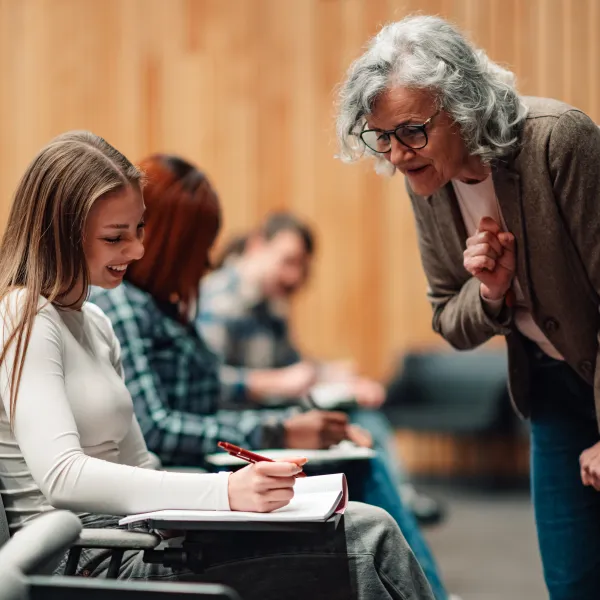
Senior female professor mentoring young adult student in a university classroom, providing guidance during a college lecture

Next Steps

Remember—there are people with disabilities, both visible and invisible, in every field of study and career path, including post-secondary programs across all areas of interest. By learning about your rights and the supports available to you, you can take charge of your journey and move forward with confidence toward your goals. In the next section, you can focus on building the skills that will help you succeed. Taking small, steady steps now will help you feel prepared, capable, and ready to thrive in post-secondary and beyond.