
Supports and Services
Now that we’ve explored what the community pathway could look like, it’s time to understand what supports and services are available, and how to apply for them.
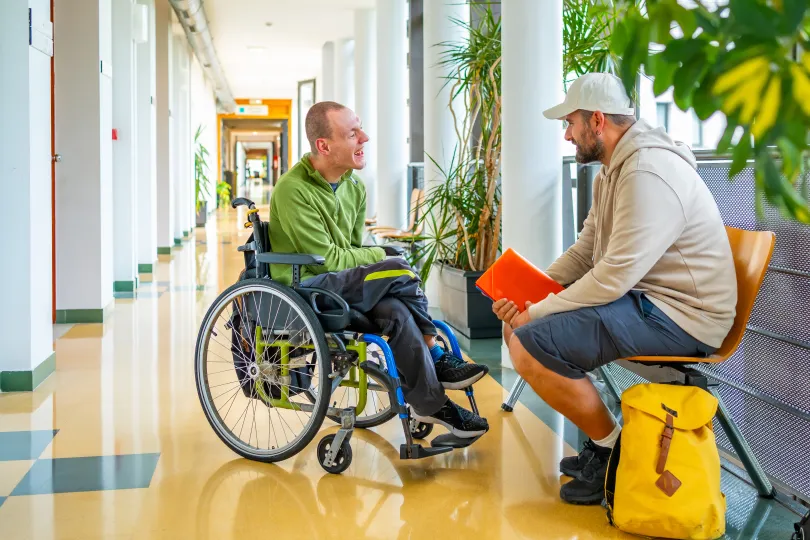
Now that we’ve explored what the community pathway could look like, it’s time to understand what supports and services are available, and how to apply for them.

Developmental Services Ontario (DSO) is the access point for adult developmental services funded by the Ministry of Children, Community and Social Services (MCCSS) in Ontario. If you have a developmental disability, it is important to register with Developmental Services Ontario (DSO) as soon after your 16th birthday as possible to obtain support with goal-setting and service navigation.
Through the DSO, individuals can access different services in their community, such as:
Note: there are often waitlists for these services. As such, connecting with DSO as early as possible helps to reduce wait times and helps to ensure a smooth transition process.
To apply, you will need to prove that you have a developmental disability, meaning that you will need a written psychological assessment completed by a psychologist or psychological associate. You will additionally need evidence that you live in Ontario (such as a health card, lease or rental agreement, bank account statement with your address, or driver’s license or other government-issued photo ID) and proof of your age (such as a birth or baptismal certificate, passport, Ontario Photo Card, and/or driver’s license). Ensuring that you have these documents early will help to ensure a smooth application process and avoid any additional delays in accessing adult disability-related services.

Watch this video for more information on registering with Developmental Services Ontario.
Many adult disability services (including Developmental Services Ontario) will require a psychological, psychoeducational, and/or neuropsychological assessment confirming the diagnosis of an intellectual disability. If you have a different diagnosis, and suspect that you will need supports to live in community, having an up-to-date assessment will also be helpful to identify relevant services and supports as well as to make sure you have the documentation to access these resources. Click on the buttons below to learn more.
Tip: It’s best to get an assessment done well before the age of 16 so you’re ready to apply for adult services when the time comes.
Check your records to see if you have undergone a previous formal evaluation. If you are unsure, you can:
If you cannot locate documentation that provides a specific diagnosis, you will likely require an assessment. To obtain an assessment, you can explore:
Some people may choose to remain living in their family home, and some may wish to move on to supported, semi-independent, or independent housing. This is a complex decision, involving a number of factors including your level of independence with activities of daily living (such as engaging in hygiene tasks, cooking, cleaning, and managing your own medications and finances), your family situation, and your personal goals, as well as current waitlists and availability of programming in your community. You can use the DSO Housing Toolkit to start exploring housing options that align with you and your family’s goals. You may also choose to work with a DSO housing navigator to discuss options available in your specific community.
Remaining in the family home can offer a familiar and supportive environment that helps ease the transition into adulthood. As you start to take on adult roles, responsibilities, and challenges, your support needs will likely change and both you and your caregivers may find yourselves adjusting to new roles and routines. This shift can be an opportunity to strengthen relationships, foster independence, and explore new ways of living together that reflect your evolving needs and goals. There are family support groups available to support family members with this change. Respite services (video) are available to caregivers of adults with intellectual disabilities to allow everyone with periods to rest and recharge.
In supported housing, a person lives in either a home placement (see Family Home for a description) with a family who can provide a caring, stable environment on a full-time basis, or Group Home, which is a home composed of multiple persons as well as staff to provide their care. These supported living arrangements often mimic the level of support available to people prior to the transition to adulthood but can afford the person with a disability a sense of autonomy and opportunities for new relationships.
For people requiring less support with day-to-day activities of daily living, some communities have opportunities for Supported Independent Living (SIL) (video). SIL allows a person to live in their own space but with staff available in the same building or close by to provide support with tasks, such as shopping, budgeting, and housekeeping, as needed. Wait times for SIL can be long. As such, it is important to explore this option early and to have a plan in place should a spot in a SIL placement not be readily available.
For people generally able to live independently but who require access to support, as needed, for more complex situations, independent living may be appropriate. In some cases, people may qualify for the Adult Protective Service Worker (APSW) program which supports adults with a developmental disability who are living on their own. The goal of the program is to help you live as independently, safely and securely as possible in your community by helping you find and maintain social and housing services, health and dental care, and counselling for emotional support.
The shift from child- to adult-oriented care often brings new challenges: pediatric supports tend to end between the ages of 16 and 18 and you therefore may need to transition to adult-oriented practitioners and services. Building these relationships early helps ensure continuity of care, promotes preventive health, and supports advocacy around issues such as communication needs, behaviour, and medication management. Families and caregivers can work closely with Developmental Services Ontario (DSO) to navigate this process — DSO is the central access point for provincially-funded adult developmental services in Ontario, including specialized clinical and community supports. You can additionally contact Health Care Connect to find family doctors and nurse practitioners in your community who are accepting new patients.

Adulthood brings new opportunities—and new costs. Many of the living, social, and recreational programs highlighted in this section operate on a fee-for-service basis. The good news is that there are funding supports available for persons with intellectual or significant disabilities, and you may be eligible. With the right information and planning, these resources can help make meaningful experiences and supports more accessible.
The Disability Tax Credit (DTC) is a non-refundable tax credit that helps people with disabilities, or their supporting family member, reduce the amount of income tax they may have to pay. By reducing income tax, the DTC aims to offset some of the extra costs related to the disability. You can apply for this benefit at any time. However, the DTC may periodically expire, requiring a new application to confirm eligibility for services.
The Canada Disability Benefit provides direct financial support to people with disabilities, between 18 and 64 years old, who have already qualified for the Disability Tax Credit. Designed to provide monthly financial support to low income Canadians with disabilities, the program is administered through Service Canada. To document your income, it is helpful to complete your income tax prior to application (at the age of 17). For free help with your income tax, you can use free tax clinics hosted by community organizations through the Community Volunteer Income Tax Program (CVITP).
Passport is a program that helps adults 18 years or older with a developmental or intellectual disability participate in their communities and live as independently as possible. It also helps caregivers of an adult with a developmental disability pay for respite services. If eligible, this financial support is available through your Developmental Services Office (DSO).
The Ontario Disability Support Program (ODSP) can provide financial support and other services to eligible individuals. People with disabilities that affect their ability to access the community without support should begin their ODSP application at 17.5 years old, so that it can be completed before they turn 18. This program can provide financial, medical (through a drug card), and employment supports, as needed. You can apply for ODSP online, in-person, or by calling the Social Assistance Support Line Toll-free: 1-888-999-1142 or Toll-free TTY: 1-800-387-5559. Of note: Anyone who is eligible to receive developmental services through DSO automatically meets the disability requirement for ODSP. While you will still have to formally apply for ODSP, you can use the DSO eligibility letter as part of your application for income support with the ODSP.
Some individuals in the community pathway may find it difficult to independently manage their own finances without oversight and support. Information on supported financial assistance is available through IF Library and supportive decision-making can be accessed through Community Living.
Numerous resources and supports are available to support people with intellectual disabilities participate in their communities. Depending on your needs, the community you live in, and other factors, you may be eligible for programs and services like the ones outlined below. Click on the buttons below to learn more.
Recreation or arts programs are fun and engaging ways to connect with others and take part in your community. Some programs are province-wide, while others may be more specific to your area. Asking your support staff, whether at school or through a community disability service, will be helpful to identify specific programs available in your community.
In addition to the links above, contact your local Developmental Services Ontario and/or Community Living agencies to explore available recreation programs in your community.
Many people with intellectual disabilities enjoy participating in their community through employment or volunteering. School staff and your local community employment agency will be a big support in exploring volunteer or employment opportunities in your community.
Programs such as Ready, Willing and Able connect and support employers, persons with an intellectual disability and/or on the autism spectrum and local, provincial and national community employment agencies.
Additionally, the Canadian Association for Supported Employment (CASE) provides information on agencies providing supported employment, as well as information on their MentorAbility program mentoring program. Employment supports may additionally be available in your community through the Ontario Disability Support Program (ODSP) and the March of Dimes.
If employment is a goal, discussing regionally available employment supports with educational/guidance staff and developmental services providers will be important to ensure that you understand the services/supports available in your community.
You can also learn more about the working world in the Workplace section.
CICE (Community Integration through Co-operative Education) programs are college programs designed for students with intellectual disabilities or other significant learning challenges. These inclusive education programs give you the opportunity to experience college life and pursue post-secondary education, with courses tailored to meet your individual needs. Inclusive education students will have access to a learning facilitator for both in-class support and tutoring outside of the classroom. Students who complete the CICE program will earn a certificate, rather than a traditional college diploma. While some graduates of the CICE program may pursue further post-secondary education, or secure a job in a related field, completing the CICE program does not guarantee job readiness or ability in that career field. For many students, the benefits of the CICE program are ongoing learning, social engagement, and improving one's independence. You can learn more about life at college in our Post-Secondary Education section.
Online learning and skill development opportunities are available across Ontario through Adult Literacy and Basic Education programs. These programs are free of charge and help to improve your reading, writing, math, digital and other essential skills to help you achieve your goals of further education, training, employment, or independence. Further, there are free online resources to build your skills, such as the Skills for Success webpage.
Learning to navigate your community and use public transportation is a significant skill for people with intellectual or other significant disabilities to participate in their community. Services and supports differ by region, but most offer programs such as:
Now that we have explored the programs, supports, and resources available for adults in the community pathway, as well as your rights and responsibilities, we need to start planning your transition, ensuring that you have the skills needed to successfully achieve your transition goals.