Community icon

Goal Setting

An important part of transition planning is setting goals for life after high school, and then developing the necessary skills to work towards those goals. You may wish to think about:

  • Work or Job Interests: Hands on tasks? Working with animals? Working with people?
  • Skills I Want to Learn: Money? Travel? Work skills? Talking with others?
  • Fun Things I Want to Do: Sports? Art? Volunteering?

Your caregivers and school staff can help you figure out your goals for life after high school. They can do this by talking with you, using activities or assessments, and noticing what you are good at and where you might need support. Your voice is the most important part of the process, but you don’t have to do it alone.

Key questions to consider include: 

  • What goals do you want to work toward after high school (learning, working, volunteering, living, social connections, etc.)? 
  • What strengths can you capitalize upon when thinking about your life after high school? 
  • What areas of challenge might impact your ability to reach your goals? 
    • What areas of challenge can you address through skill development? 
    • What areas of challenge may require additional support (such as job coaching) or environmental modifications (such as visual schedules or quiet workspaces)
  • Who can you turn to for support with skill development (caregivers, educators, community agencies, etc.)? 
  • As you won’t have an Individual Education Plan (IEP) after high school, how will you communicate any needs for environmental modifications to others?
visually impaired young woman sitting in the bench on the street and holding white cane and smartphone in her hand

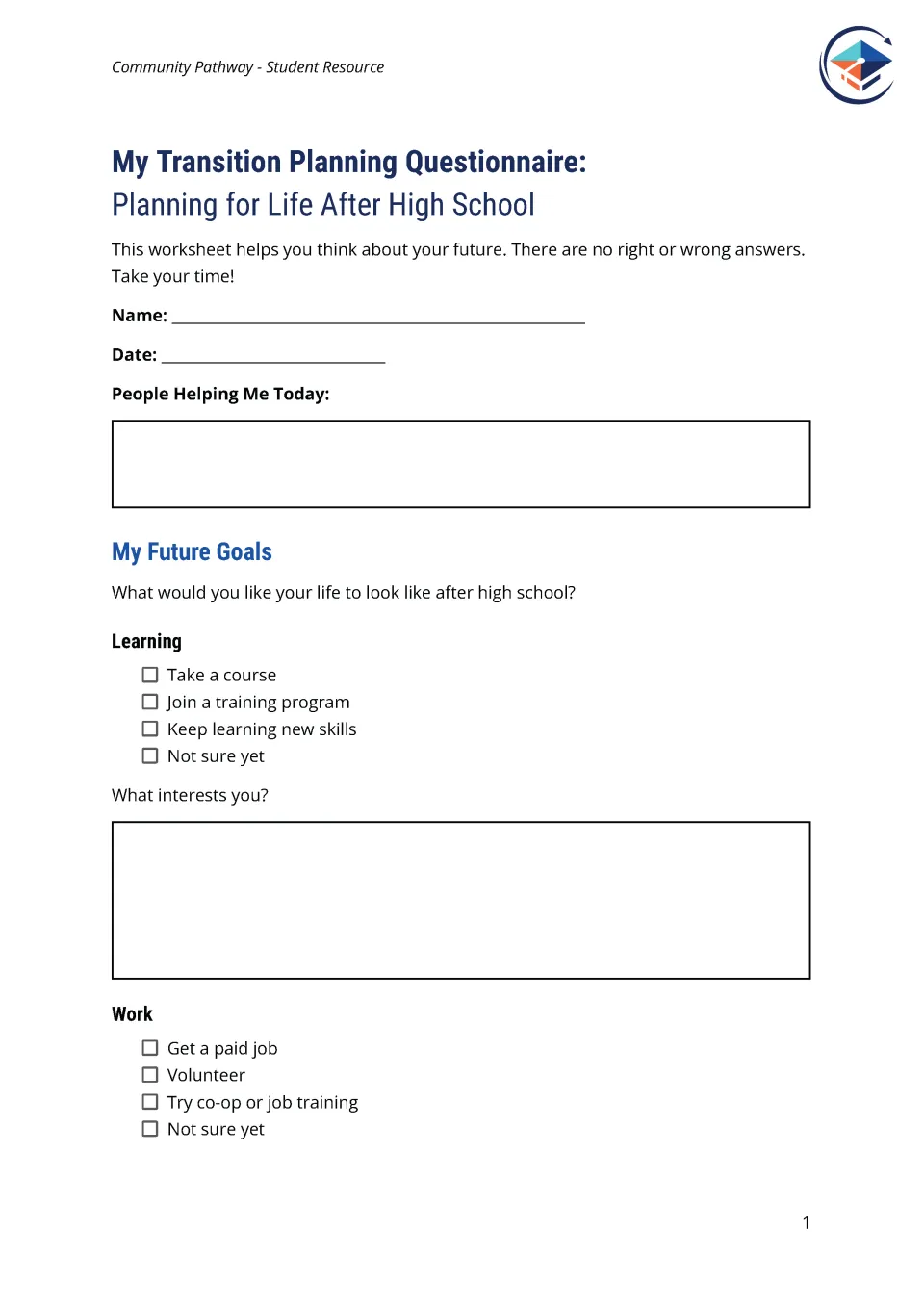
My Transition Planning Questionnaire

You can use a goal setting worksheet like this one, to help plan your goals, evaluate your strengths and needs, and make an action plan. 

My Transition Planning Questionnaire

Preview of the first page of the "My Transition Planning Questionnaire"

Skills and Readiness

Once your transition goal is set, and you and your caregivers have started the administrative processes to access required supports in the community, an important step is to evaluate your current skills and abilities to determine if there are any skill deficits or gaps that might ultimately affect your success in the community pathway. 

A skills self-assessment can be completed through various means, such as:

  • self-reflection
  • self-assessment questionnaire (see below)
  • discussions with key supporters (including caregivers and educational, community, and medical supports)
  • the evaluation process with Developmental Services Ontario (DSO)
Mother and teenage daughter relaxing on a sofa, sharing a moment while using a smartphone together.

Skills Assessments

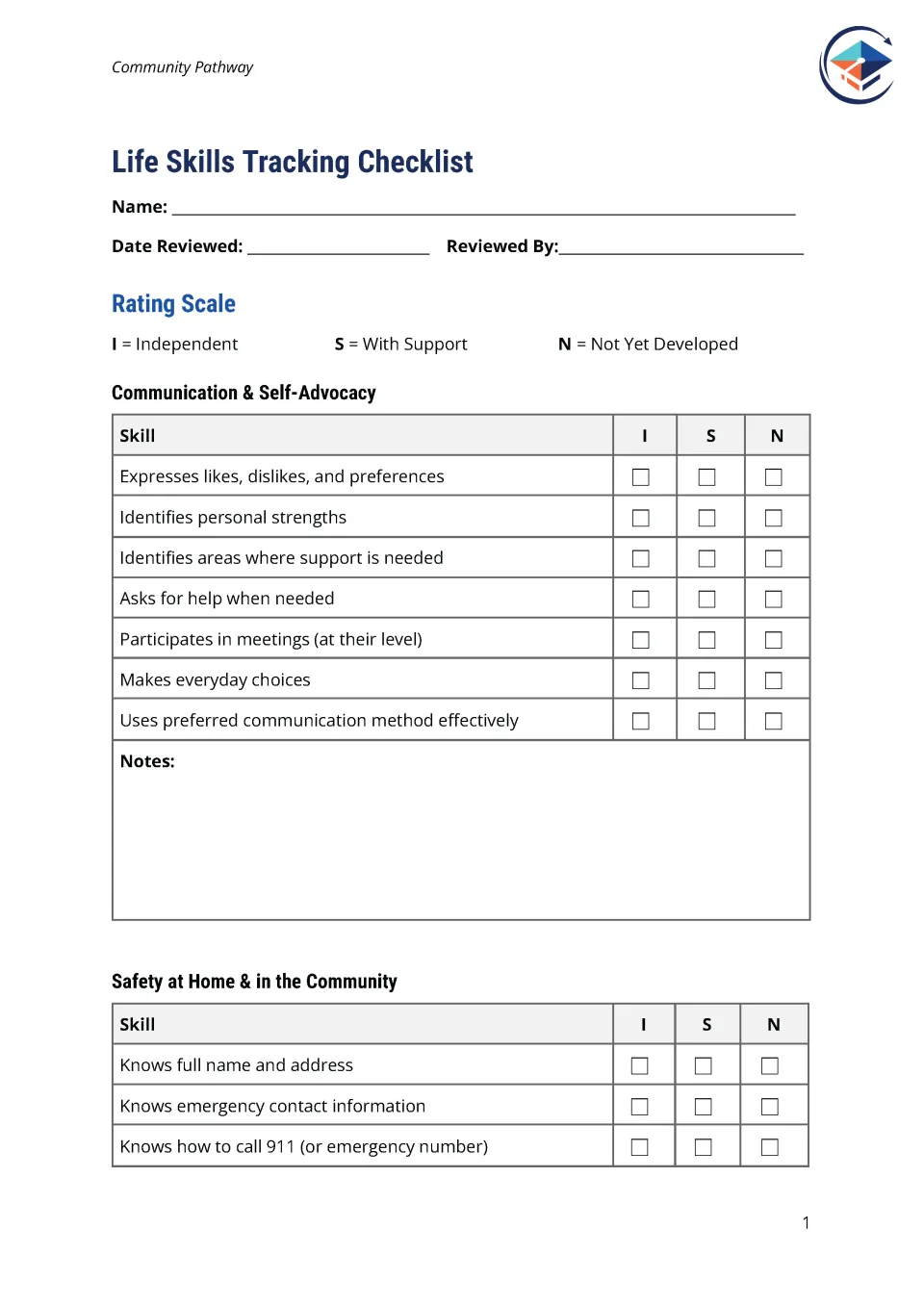
The skills students rely on to live and participate in the community are sometimes called “life skills” or “independent living skills.” Here is a checklist to rate your skills and to determine areas that may need strengthening or improvement.

Life Skills Tracking Checklist

Screenshot of first page of the Life Skills Tracking Checklist

While everyone’s personalized skill development plan will look different, there are some common goals that people in the community pathway often consider. Some key skills that help people thrive in this pathway include:

For everyone:

  • Communicating your needs and preferences 
  • Understanding safety at home and in the community 
  • Building relationships and participating in shared spaces 
  • Knowing when—and how—to ask for help 
  • Managing powerful emotions in ways that keep you and others safe

For those with more independence:

  • Making and following daily routines 
  • Implementing self-care skills independently, such as bathing, brushing teeth, and wearing clean clothes 
  • Engaging in required household tasks, such as cleaning, laundry, and basic cooking tasks 
  • Budgeting and spending your money wisely

How Can I Build These Skills?

You can begin building the skills and abilities to promote independence long before you graduate. The goal is to develop confidence and comfort using required skills—with the support you need. These types of goals should be outlined in your high school Individual Education Plan (IEP), often through the development and implementation of alternate learning goals

Having already discussed your long-term goals, your supporters can help you link specific skills to future outcomes, to help promote motivation. Prioritizing tasks according to your interests can also be beneficial, starting with one or two goals. Further, you may want to make sure that your goals are SMART, meaning that they are Specific (create a clear and concise goal), Measurable (ensure you can measure progress), Achievable (ensure you can achieve the goal), Relevant (short-term goal aligns with your long-term goal), and Time-bound (make sure that your goal has a time frame for achievement). 


Young adult male in the kitchen cooking

Skill Building Guides and Resources

The transition from secondary school to the community pathway means a change in how people interact with others on a day-to-day basis. Whether in the workplace, a volunteer role, in community programming, and/or living with others outside your family, interacting with new people will require a new set of skills and abilities.

Below are common skills needed for success by those living in the community, and steps and resources to develop these skills. 

Knowing Your Needs and Preferences

The process of learning to understand one’s own strengths, challenges, and preferences, then communicating those insights effectively, is often described as self-advocacy. 

For many people, self-advocacy begins with noticing your personal needs and preferences through self-reflection and talking to trusted supporters. For example, some people learn best with visual aids or short verbal instructions. Others prefer a structured environment to navigate social or learning tasks. Some use specialized communication methods, such as digital resources or pictures to express their needs. Recognizing these personal patterns is a crucial first step in advocating for yourself, whether in the classroom, workplace, or community setting. 

How do you identify your needs and preferences?

  • Reading previous assessment reports: Detailed information on your strengths and areas of challenge is often located in your psychological, psychoeducational, or neuropsychological assessment. 
  • Looking at the strengths and needs on your most recent Individual Education Plan (IEP): Your IEP includes a section that clearly lists your current strengths and areas of need. This can be helpful information to inform decisions on strategies that will help those around you easily understand how to effectively work with you. 
  • Gathering information from those around you: You can talk to those around you, such as friends, teachers, family members, and other trusted support individuals about their observations on how you succeed and what tends to get in your way.

Communicating Your Needs and Preferences

Once you have this information, it is often helpful to produce a written document to not only help with your thinking but also to allow you to easily communicate the information to others. As your Individual Education Plan (IEP) from high school won’t follow you into the adult world, it is often helpful to develop a one page “cheat sheet” for those you will be working with in the community to understand you. While it doesn't replace building a true relationship, it creates the opportunity for someone to start off on the right foot so they are able to build and grow a relationship and work with you effectively from the start. 

Remember, the One Page Profiles (a one-page summary of strengths and needs and the associated strategies/learning methods/environmental supports that help you succeed) are working documents—meaning they are ever-evolving and always changing... just like you! 

How do you create a one-page profile? 

Safety at Home and in the Community

Understanding how to stay safe in different environments is an essential part of becoming more independent. Safety skills can include knowing what to do in an emergency, identifying trusted people to ask for help, and recognizing unsafe or uncomfortable situations. Learning safety strategies gives people greater confidence and freedom while also providing peace of mind to families and caregivers. 

Safety planning often involves a mix of environmental supports, supervision, and personal awareness. For example, some people may benefit from technology supports like GPS tracking or emergency call buttons, while others may need practice following a “what if” plan when encountering an unfamiliar situation. Teaching these skills early—and reinforcing them regularly—helps build habits that keep people safe both at home and in the community. 

How can caregivers support your safety needs?

  • Supervision as Needed: The right level of supervision can encourage autonomy while ensuring safety. Gradually reducing direct supervision as skills grow allows the individual to practice independence with support close by via phone. 
  • Use of Alert Tools or Safety Resources: Tools such as medical ID bracelets, phone safety apps, or visual emergency cards can communicate important information in urgent situations. 
  • Encountering Unsafe Situations: Discuss safe versus unsafe situations, using conventional vocabulary and evaluating ways to address the situation. 
  • Online Safety: With the internet being an integral part of communication for many, it is important to provide the knowledge and skills to ensure online safety. 

For more information on staying safe, go to: 

Building Relationships and Participating in Shared Spaces

Developing meaningful relationships and learning to navigate shared environments are central to community life. Social participation helps people experience belonging, develop communication skills, and form supportive networks. For people with developmental or intellectual disabilities, social success often comes from intentional teaching, structured practice, and inclusive opportunities. 

Being part of shared spaces—like classrooms, workplaces, or recreational programs—means understanding both personal needs and group expectations. Building social and sensory awareness can increase comfort and reduce stress during interactions.

How do you build this skill? 

  • Strengthening Social Skills: Practice conversation starters, greetings, and recognizing social cues. Encourage participation in structured social activities where expectations are clear. 
  • Managing Sensory Processing Differences: Sensory sensitivities can impact comfort in group settings. Adjust lighting, noise, or seating as needed and teach coping tools such as noise-canceling headphones or scheduled breaks. 
  • Identifying and Practicing Complex Social Interactions: Use visuals or social stories to explain group rules or public behaviors (e.g., taking turns, respecting personal space). Reinforce successes and celebrate progress. 

For more information and resources on building healthy relationships, go to: 

  • Tipsheet - Sexual Health Resources for Young Adults with Disabilities 
  • Tipsheet - LGBTQ2S+ Welcoming Services and Spaces for Adults with Disabilities 
  • Tipsheet - Resources for Parenting with a Disability

Communicating With Others and Asking For Help When Needed

Being able to communicate with a wide variety of individuals in the community is an important skill for everyone. Improving communication may involve working with a speech and language pathologist, using alternative communication devices, or practicing social scripts. Developing the ability to convey one’s thoughts, feelings, and questions increases the likelihood that others will listen and respond with helpful support. 

How do you build this skill?  

  • Role playing practical scenarios can help people prepare for real-world interactions. Some helpful role-playing scenarios can be found here
  • Practice community interactions with support. Engage in real-world outings, such as going to a coffee shop, grocery store, or library. These provide organic opportunities to initiate conversations and interact with community members. 
  • Use visual supports and adaptive tools. For people with limited verbal skills, incorporate visual aids like picture cards, communication boards, or specialized apps to help express thoughts and needs effectively. 
  • "Help-Request List" creation. Guide people to identify situations or tasks that are challenging and for which they may require assistance. Then, help them determine who the appropriate person to ask would be and practice how to approach them with a specific request.

Managing Powerful Emotions in Ways that Keep You and Others Safe

Everyone experiences big emotions, but learning to express and regulate them safely is key to well-being and independence. Emotional regulation helps people recover from stress, interact positively with others, and make healthy choices. For people with developmental or intellectual disabilities, this skill develops through consistent routines, supportive coaching, and practice in real-life contexts. 

How do you build this skill? 

  • Building Distress Tolerance: Practice calming strategies before stressful moments occur. Techniques may include deep breathing, sensory tools, or mindfulness activities. 
  • Adapting Environments and Schedules to Maximize Success: Predictable routines and clear transitions can prevent frustration. Adjusting demands or providing visual timetables helps individuals feel secure and prepared. 
  • Strengthening Self-Awareness Skills (e.g., Zones of Regulation): Teach people to recognize emotional states and select appropriate strategies for returning to calm. This builds emotional vocabulary and self-control. 

Once foundational skills are built, some may move on to using more advanced independent living skills.

Advanced Skills for Success

These advanced skills focus on building the routines, responsibilities, and practical life skills needed to live with greater independence in the community. These skills support confidence, reduce stress, and help make everyday life more predictable and manageable. Some of these skills may not be realistic, appropriate or relevant for all students - and that's okay.  If these skills do align with your personal goals for life after high school, there are tips, strategies and resources below to help focus and develop these areas. 


Making and Following Daily Routines

Building consistent daily routines supports independence and reduces anxiety. Routines make transitions predictable and help people take ownership of their day. 

How to build this skill: 

  • Creating a Morning or Evening Routine: Structured routines encourage self-initiation and consistency. Developing visual schedules can be helpful to ensure that everyone remains on track. 
  • Using Calendars, Alarms, and Reminders: Visual or digital tools can prompt tasks and support time management. Regular practice entering appointments, scheduled events, and chores into a calendar, and setting alarms to prompt task completion, is a great way to keep track of required activities.

Implementing Self-Care Skills

Self-care is more than hygiene—it includes health management, rest, and emotional well-being. These skills promote confidence and autonomy. 

How to build this skill: 

  • Implementing Regular Routines: Consistent self-care schedules support health and predictability. 
  • Breaking Up Larger Tasks: Chunk larger tasks into a series of smaller subtasks that can be taught individually.
  • Using Checklists or Visual Aids: Visual cues make multi-step routines easier to remember and follow. 

For more strategies and resources related to self-care skills, check out this video: 
Disability and Independent Living: How Small Daily Skills Create Big Change | Autism

Engaging in Required Household Tasks

Contributing to household responsibilities teaches valuable life skills and provides a sense of accomplishment. 

How to build this skill: 

  • Begin with Areas of Interest: Identify areas of appeal to promote motivation. 
  • Start Small and Build Up: Begin with one part of a task, then gradually increase responsibility. 
  • Practice Real-World Tasks: Grocery shopping, cooking, and cleaning provide functional learning opportunities. 

For more strategies and resources related to household skills, check out:


Using Required Transportation or Navigating Community Spaces

Learning to move safely and confidently within the community is a major milestone toward independence. 

How to build this skill: 

  • Travel Training: Practice using public transit, reading schedules, using ride apps, and understanding routes. Practice, using What if’s? What if the bus is late? What if a road is closed? 
  • Learning to Navigate with Support: Use simplified maps to practice everyday routes to reinforce spatial awareness. Identify safe people to turn to along the way (such as store clerks, police officers, etc.) should they lose their way. 

For more strategies and resources, check out the Public Transit Resources for People with Disabilities and/or Travel Resources for Youth and Adults with Disabilities documents.

Budgeting and Spending Money

Understanding money promotes self-reliance and decision-making. Financial literacy can begin with small experiences and grow over time. 

How to build this skill: 

  • Budgeting for Fun and Needs: Learning to plan for both necessary and enjoyable expenses helps develop healthy habits.
  • Handling Small Amounts of Money: Start with cash transactions for small purchases to practice counting and change-making. How to use bank cards? Tap or pin code? Tipping? What if you are asked “do you want to make a donation” or “do you want to sign up for a credit card”? 

For more strategies and resources to build budgeting and money knowledge, go to the banking and budgeting resource.

Next Steps

Your goals, interests, and strengths matter, and they help shape the life you want to build.  There are caring people and supports in your community who are ready to help you along the way. With the right preparation and support, you can grow your independence and create a life that feels meaningful, connected, and right for you.