
Finding a Job

The first step in getting a job, is to find jobs to apply for. Depending on the company, position, and location, job openings may appear: 

  • Online on job boards, such as Job Bank Canada 
  • On company websites or social media pages 
  • At job fairs or community events 
  • Directly at local businesses—some smaller stores, cafés, and restaurants may accept resumes in person 
  • Through your network—friends, family, neighbours, or mentors 

If you’re having trouble finding openings, don’t worry! Check out: 

A close-up shot of hands typing on a laptop keyboard, bathed in warm sunlight

Applying & Interviewing

Once you've chosen some jobs to apply to, strong application and interview skills are key to landing a job. This includes: 

  • Writing a tailored resume that highlights your strengths and experience 
  • Creating a cover letter specific to each job 
  • Preparing for interviews, including practicing common questions and sharing examples of your skills 

There are many resources available to help you build these skills, including: 

Remember: every step you take—whether applying, interviewing, or gaining experience—gets you closer to your first job and builds the skills for long-term success.

Planning for Daily Living

Think about the other areas that you will need to plan for as you prepare for this transition. Think about the following questions:

  • Have you considered housing – where will you live? 
  • What about transportation – do you have access to public transportation or your own vehicle? 
  • How will you use your earnings and pay for necessities, and build a budget for your lifestyle? 
  • Health and safety at work - do you know your rights and how to stay safe on the job?
  • Do you know how to access health care in your community and have a plan for socialization and recreation?
  • Is there anything else that should be on your list as you prepare for this transition?

If you're looking for support in any of these areas, do some research, ask friends and family, or reach out to local community groups or your workplace to learn more about your options.  The more prepared you are in your daily life, the more you'll be able to focus on the demands of your training and learning. 

Job Readiness Worksheet

As you prepare to the join workforce - take a moment to reflect on what you know about yourself, your strengths and weaknesses and how they'll interact with your workplace environment and demands.  Use this Job Readiness Worksheet to make yourself a plan, and set yourself up for success. 
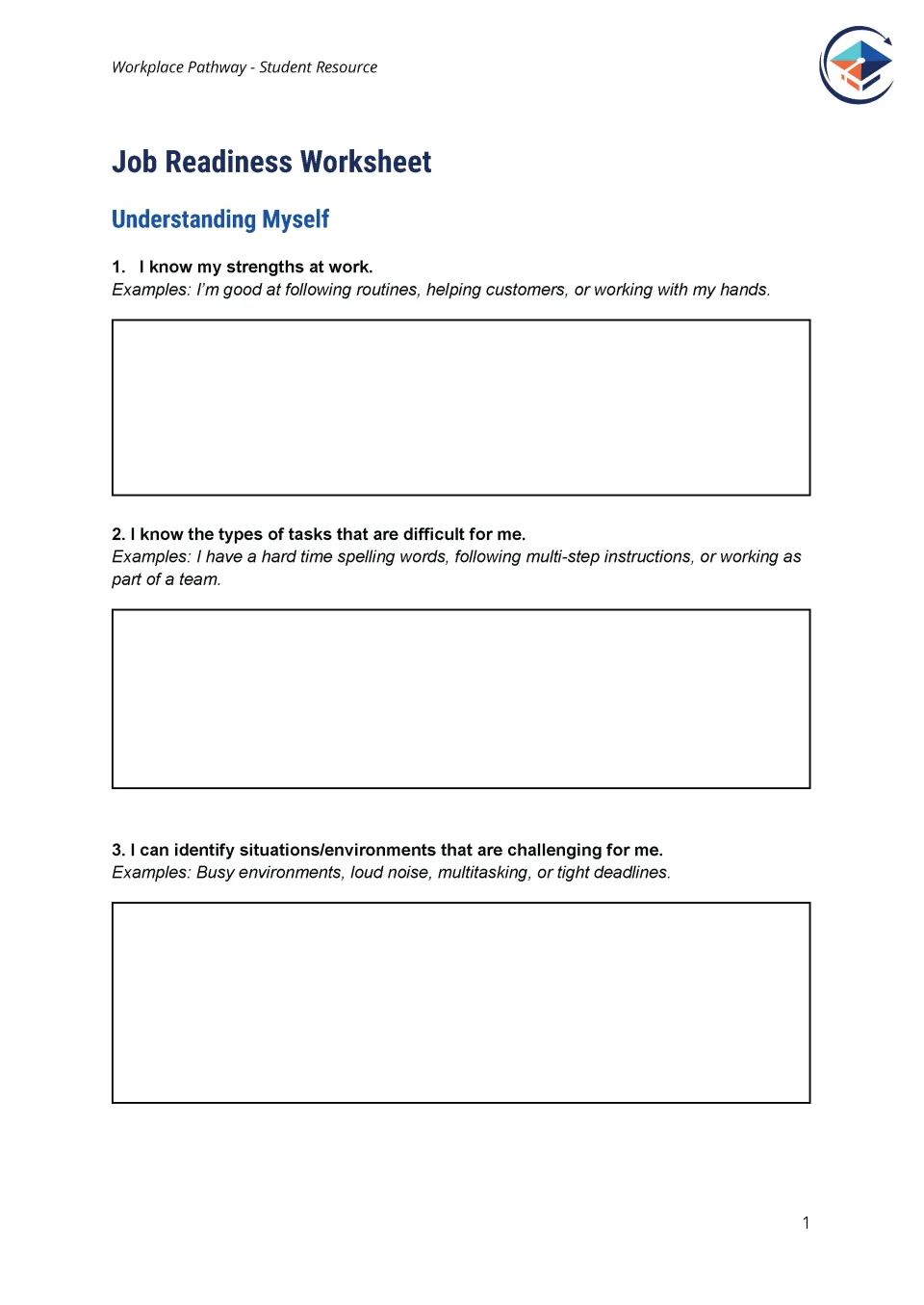
Download the Job Readiness Worksheet 

""

Your Transition Roadmap

It's time to go! Are you ready? What do you need to do to get started and prepared for your next stage? Are there any other things you'd add to this list?

Prepare Early

Early preparation, planning and skill building will give you a big advantage when joining the workforce. 

Know Your Pathway

Do you have the job-finding, applying, and interviewing skills you'll need?

Plan Accommodations

Will you disclose your disability to your employer? What accommodations and supports will you request?

Build Required Skills

Create and follow your plan to build the skills you'll need for success.

Prepare for Independent Living

Do you have your finances, housing, transportation and other essentials planned? 

Identify Additional Planning Needs

Anything else? What are items will you add to your transition plan?

Congratulations!

You’ve chosen your pathway and are taking steps toward your future. Entering into the workforce takes dedication, resilience, and a strong work ethic—and you’re well on your way. Keep building your workplace skills and creating your pathway to success!